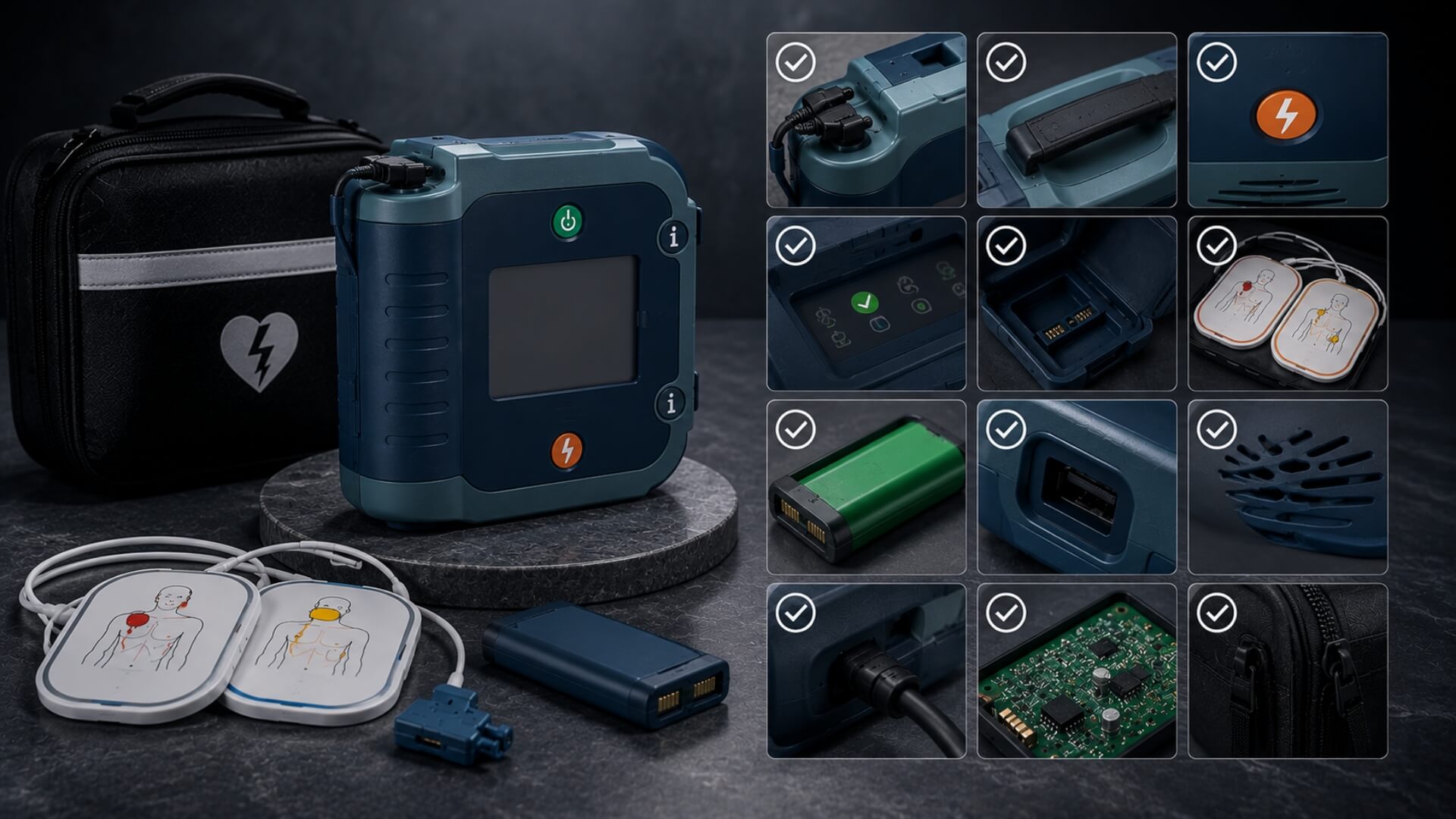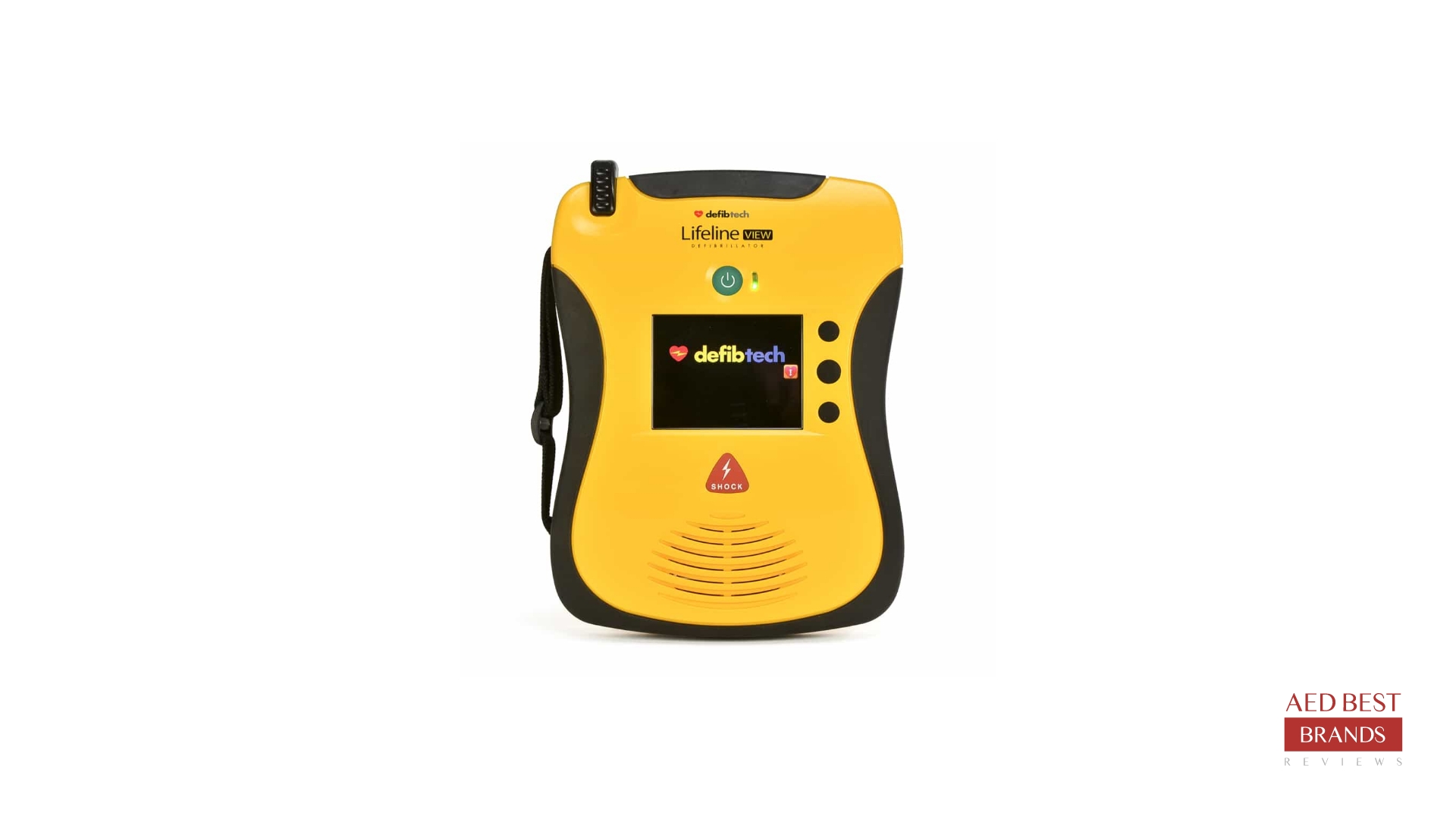
- •The only AED with a full-color video screen: the VIEW shows rescue video plus voice prompts, useful in loud or multilingual settings.
- •Same simple two-button use as the Lifeline, with an active status indicator.
- •FDA-approved via PMA (P160032). See all Defibtech models or refurbished options.
Verdict: The Defibtech Lifeline VIEW (DDU-2300) is the AED that shows an untrained rescuer what to do, FDA-approved under PMA P160032[1]. Its full-color screen plays real-time rescue video, the only mainstream AED that does, which is exactly what a panicked bystander needs. Listed around $1,695 at authorized US distributors (2026, confirm current). Buy it for public, lay-responder settings. Save money with the voice-only standard Lifeline if your responders are trained.
Decision shortcut
Buy the Lifeline VIEW for lobbies, gyms, schools, hotels, and any public place where the likely rescuer is untrained and a video will guide them better than a voice.
Buy the standard Lifeline to save money when voice prompts are enough and you want the 7-year battery.
Step up to the ZOLL AED Plus if trained responders need real-time CPR depth feedback.
Who should buy the VIEW, and who should not
The VIEW exists for one situation: the rescuer is a member of the public who has never trained, and the difference between acting and freezing is whether they can see what to do. Its full-color display shows moving video of each step, from pad placement to compressions, which is a genuinely different experience from listening to prompts under stress. That makes it a strong fit for hotels, gyms, schools, offices with heavy foot traffic, houses of worship, and any lobby where whoever grabs the device could be anyone.
It also suits multilingual environments and program managers who want the most self-explanatory device on the wall. For the broader range, see our Defibtech AED lineup, and for placement by setting, our AEDs for gyms and AEDs for hotels guides.
Skip the VIEW if any of these apply
Your responders are trained and drill regularly. Trained staff get less value from the screen and more from depth feedback; look at the ZOLL AED Plus.
You want the lowest price and longest battery. The standard Lifeline costs less and offers a 7-year battery; the VIEW runs a 4-year battery.
You need real-time compression depth coaching. The VIEW shows and speaks the steps but does not measure depth.
The VIEW advantage: a rescue you can watch
Every other mainstream AED coaches with voice and, at most, flashing icons. The VIEW adds a high-resolution color LCD that plays full-motion video alongside on-screen text and voice prompts[2]. For an untrained bystander, seeing a demonstration of where to place pads and how to compress is a meaningfully lower barrier to acting than audio alone. The American Heart Association reports that immediate bystander CPR can double or triple survival from cardiac arrest[3], so anything that gets a hesitant rescuer moving faster is worth real money in a public setting.
The hardware backs the concept. The VIEW weighs less than 3 pounds, the lightest full-size AED in its class, and carries an IP55 rating (dust protected, protected against water jets)[2]. It is semi-automatic: it advises the shock and the rescuer presses the button, delivering 150 joules for adults and 50 joules for children on pediatric pads.
What the VIEW costs to own over five years
The VIEW lists around $1,695, a premium over the voice-only Lifeline that buys the screen. Budget past the sticker for the consumables that expire inside five years: Defibtech rates the standby battery at 4 years, and pads carry their own printed expiration.
Five-year cost of ownership (calculation, not a quote)
$1,695 device (2026 list, confirm current) + one battery inside the five-year window + pad replacements on their printed cycle. The 4-year battery means one battery event in the period, versus effectively zero for the 7-year standard Lifeline.
Assumptions: typical 2026 consumable prices, no rescue deployment (any use means an immediate pad replacement), and no cabinet, signage, or training. Confirm current pricing and run your unit count in our AED cost calculator.
How the VIEW compares
The VIEW is really weighed against its own voice-only sibling and the feedback-focused ZOLL AED Plus. All are FDA-approved through the PMA process, so the differences are coaching style, battery interval, and price, not regulatory standing.
| Device | 2026 list price | Coaching | Battery standby | Weight |
|---|---|---|---|---|
| Defibtech Lifeline VIEW | ~$1,695 (confirm current) | Color video + voice | 4 years | Under 3 lb |
| Defibtech Lifeline | Budget (confirm current) | Voice prompts | Up to 7 years | ~4.2 lb |
| ZOLL AED Plus | ~$2,082 (confirm current) | Real-time depth + rate | ~5 years | ~6.7 lb |
The read: the VIEW wins for untrained public rescuers who benefit from a screen. The standard Lifeline wins on price and battery life. The ZOLL AED Plus wins when trained staff will use depth feedback. For the full field, see our best AED guide.
Defibtech Lifeline VIEW specifications
| FDA status | Approved via PMA P160032 |
| Model | DDU-2300, semi-automatic |
| Display | High-resolution color LCD, full-motion video + text prompts |
| Weight | Less than 3 lb (1.4 kg) |
| Ingress rating | IEC 60529 IP55, dust protected, protected against water jets |
| Battery standby | 4 years |
| Shock energy | 150 J adult; 50 J child/infant |
| Pediatric | Child/infant pads (DDP-2002) for under 8 years or under 55 lb |
Specifications per Defibtech product documentation[2]. Confirm the current spec sheet and configuration before purchase.
Frequently asked questions
Is the Defibtech Lifeline VIEW FDA approved?
Yes. The Lifeline VIEW holds FDA premarket approval under PMA P160032[1], the agency’s most rigorous device pathway. Verify the record in the FDA PMA database linked in the references, and compare it against the rest of the Defibtech lineup.
What makes the VIEW different from other AEDs?
Its full-color screen plays real-time rescue video, not just voice prompts[2]. It is the only mainstream AED that shows an untrained rescuer what to do on a video display, which is its whole reason to exist for public settings.
VIEW vs the standard Lifeline: which should I buy?
Buy the VIEW when the likely rescuer is untrained and a video will help them act; buy the standard Lifeline to save money and get a 7-year battery when voice coaching is enough. Our Find Your Perfect AED quiz maps your site to one in about a minute.
Can the VIEW be used on children?
Yes, with the child/infant pads (DDP-2002) for patients under 8 years or under 55 pounds, which lower the delivered energy to 50 joules[2]. Facilities serving children should also read our AEDs for schools guide.
How long does the VIEW battery last?
Defibtech rates the VIEW standby battery at 4 years[2]. If a longer maintenance interval matters more than the screen, the standard Lifeline offers a 7-year battery option.
Is a refurbished VIEW a safe way to save?
It can be, if the reseller documents a full recertification, fresh pads, a current battery, and a written warranty. The model’s PMA approval does not change with age, but an individual used unit is only as safe as its inspection and consumables. Our refurbished AED guide covers how to vet a seller.
The bottom line
The Defibtech Lifeline VIEW earns its place as the show-me AED: the only mainstream unit that plays a full-color rescue video, which is exactly what an untrained bystander in a public space needs. It costs more than the voice-only Lifeline and runs a shorter 4-year battery, but for a lobby, gym, or school where the rescuer could be anyone, the screen is worth the premium.
Next steps: check current pricing and package options on our Defibtech Lifeline VIEW product page, run your numbers in the AED cost calculator, or answer a few questions in the Find Your Perfect AED quiz to confirm the VIEW fits your site.
References
1. US Food and Drug Administration, Premarket Approval (PMA) database, record P160032, Defibtech Lifeline AEDs. accessdata.fda.gov
2. Defibtech, Lifeline VIEW AED (DDU-2300) official product and specification page. defibtech.com
3. American Heart Association, CPR facts and resources on bystander CPR and survival. heart.org
Get the Defibtech Lifeline VIEW at the right price
You have read the full breakdown. If the Defibtech Lifeline VIEW fits your setting, see current 2026 pricing, stock, and the exact pads and battery it needs on one page.