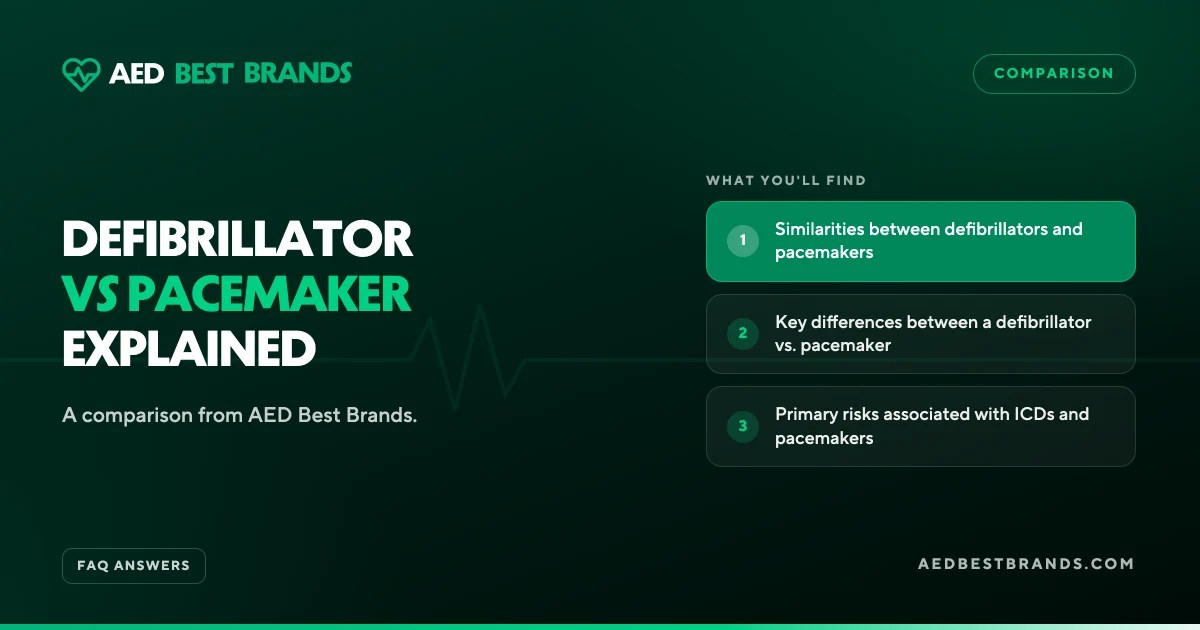
Pacemakers and ICDs are small devices placed in the chest. They help the heart function properly. While both are used to treat irregular heart rhythms, they perform different roles. A pacemaker keeps the heartbeat steady, so it doesn’t beat too slowly. An ICD detects dangerous rhythm problems and restores a normal heartbeat.
A pacemaker helps the heart beat steadily by controlling its rhythm. An implantable cardioverter defibrillator (ICD) keeps an eye out for serious problems. If the ICD finds a dangerous rhythm, like ventricular fibrillation or tachycardia, it sends an electric pulse. This pulse helps restore the heart’s normal pattern.
A pacemaker and a defibrillator have different roles if you have a heart condition. It’s crucial to know this. Knowing this difference can help you understand and trust your doctor’s treatment.
Similarities Between Defibrillators and Pacemakers
Pacemakers and implantable cardioverter-defibrillators are small, battery-operated devices that help regulate heart rhythm. They have different functions, but they share similar parts. These include a sealed lithium power source, circuitry, and leads with electrodes.
- Most of these devices use thin wires called leads. These wires travel through blood vessels to connect with the heart. Leadless pacemakers are the only exception.
- These devices are typically put in place using a simple, low-risk procedure. It’s done under local anesthesia. Recovery is usually fast. Most people return to normal activities in just a few days. However, full healing may take several weeks.
- For those who need them, these devices can enhance both longevity and quality of life. While implantation involves some risk, serious complications are uncommon.
Key Differences Between a Defibrillator vs. Pacemaker
How They Work
Implantable defibrillators work like external ones. They spot dangerous heart rhythms and quickly deliver a shock. This helps reset the heartbeat and return to a normal rhythm.
An implantable defibrillator works inside the body. It constantly checks for dangerous rhythm changes and responds right away. This is different from external defibrillators, which are used outside the body.
- An implantable defibrillator is always on. It can deliver a life-saving shock whenever needed.
- An ICD helps prevent sudden cardiac death. It automatically delivers a shock when necessary. This happens without any external action or setup.
- Many implantable cardioverter-defibrillators are also designed to perform the role of a pacemaker.
A pacemaker fixes slow heart rhythms. It sends gentle electrical impulses to keep the heartbeat steady. This works differently from an ICD.
Some implantable defibrillators do two jobs. They help manage heart rhythms. They also deliver shocks to correct dangerous ones when necessary.
Relevant Heart Conditions
Doctors often suggest implantable cardioverter-defibrillators for those at risk of serious heart rhythm problems.
- Have survived a sudden cardiac arrest
- Suffer from heart failure, especially heart failure that is getting worse
- Suffer from cardiomyopathy
- They are awaiting a heart transplant
- Have irregular heartbeats due to a structural issue
- Developed an abnormal heartbeat after suffering a heart attack
Pacemakers help people with slow or irregular heartbeats. They keep a steady and reliable heartbeat.
- Have congenital heart defects (structural problems with the heart)
- Have specific types of muscular dystrophy
- Have arrhythmias
Both devices help fix issues with how the heart’s electrical system works.
Primary Risks Associated with ICDs and Pacemakers
Most risks associated with a pacemaker or ICD stem from the implantation process. Minor swelling or bruising is common. More serious complications can happen, but they are less likely.
- Blood clots
- Damage to a blood vessel or nerve
- Heart infection
- Punctured or collapsed lung
Some patients might wear a cardioverter-defibrillator vest. It fits neatly under clothes. It monitors heart rhythms all day. If it finds a dangerous pattern, it delivers a shock.
If your symptoms are mild, an automated external defibrillator at home can provide peace of mind. You have user-friendly options. But, it is important to consult a doctor to find the best device for you.
Types of Pacemakers
Pacemakers vary in type, design, and function.
- Single-chamber pacemaker. The lead connects to either the right atrium or right ventricle of the heart.
- Dual-chamber pacemaker. This type uses two leads, with one placed in the right atrium and the other in the right ventricle.
- Biventricular pacemaker. This version also uses two leads. They are placed in the right and left ventricles. This helps both sides of the heart beat together. It’s known as a biventricular or cardiac resynchronization therapy (CRT) pacemaker.
- Leadless pacemaker. A leadless pacemaker is a small device, about the size of a pill. It connects directly to the ventricular wall. It activates when the heart rate drops below a set level.
Protecting a Pacemaker or ICD.
Pacemakers and ICDs depend on electrical signals. Strong magnetic fields can disrupt these signals. People with these implants should avoid certain electronic devices. This helps prevent interference.
- Cell phones
- Microwaves
- High-tension electrical wires
- Electrical generators
- Power plants
- Airport security
- Metal detectors
- Strong magnets
- MRI portable trucks
Always tell your doctor if you have a pacemaker or ICD. This matters before any procedure, like an MRI or kidney stone treatment. Also, mention the type of device you have. Regular checkups every few months keep everything running smoothly. They also ensure that leads are placed correctly. They can also monitor heart rhythm data.
Treating Sudden Cardiac Arrest with a Pacemaker or Implantable Defibrillator
Cardiac arrest can occur even with a pacemaker or ICD. This can happen, especially if the device fails. When helping someone, check for a small implant under the skin. It’s usually found in the upper left chest. In children, it might be on the right side or in the abdomen. ICDs are generally a bit larger than pacemakers.
If someone collapses, call emergency services immediately. Start CPR and have someone get the AED if it’s nearby. When placing the pads, keep them away from any implanted device. If you position them directly over the device, the shock may not work as well.
The Right Device for the Right Purpose
If you have heart symptoms or a past heart attack, see your doctor. They can suggest the right tests and treatments to find the best care for you.
Care options may include a pacemaker, ICD, wearable defibrillator, medication, or lifestyle changes, all aimed at promoting a longer, healthier, and more active life.
FAQs
What Is the Difference Between a Pacemaker and a Defibrillator?
A pacemaker controls slow or irregular heartbeats by sending small electrical signals. A defibrillator finds dangerous heart rhythms. It then delivers a shock to restore a normal heartbeat.
Implantable Cardioverter Defibrillator vs Pacemaker: Which One Do I Need?
The choice depends on your condition. A pacemaker helps with slow heart rhythms. An implantable cardioverter-defibrillator (ICD) is for patients who might face dangerous arrhythmias.
What Is the Difference Between a Pacemaker and a Defibrillator in Function?
A pacemaker keeps a steady heartbeat. In contrast, a defibrillator fixes dangerous heart rhythms. It delivers electrical therapy when necessary.
Cardiac life vest vs pacemaker: how are they different?
A cardiac life vest is a wearable defibrillator. It monitors heart rhythms and delivers shocks if needed. In contrast, a pacemaker is implanted. It continuously regulates the heart’s pacing.
What is a pacemaker vest, and how does it work?
A pacemaker vest, or wearable defibrillator, is worn under clothes. It keeps an eye on the heart all the time. If it finds any abnormal rhythms, it provides treatment.
Can you wear a heated vest with a pacemaker?
In most cases, wearing a heated vest is safe. However, keep heating elements away from the device area. Also, consult your doctor to avoid any potential interference.
Conclusion
Knowing how a pacemaker differs from a defibrillator is key to smart heart care choices. Both devices help manage irregular heart rhythms, but they have different purposes. Their use depends on the severity and type of condition. With the right diagnosis and treatment plan, patients can manage their heart health. This may include an implanted device, wearable tech, or lifestyle changes. As a result, they can lead a more active and confident life.