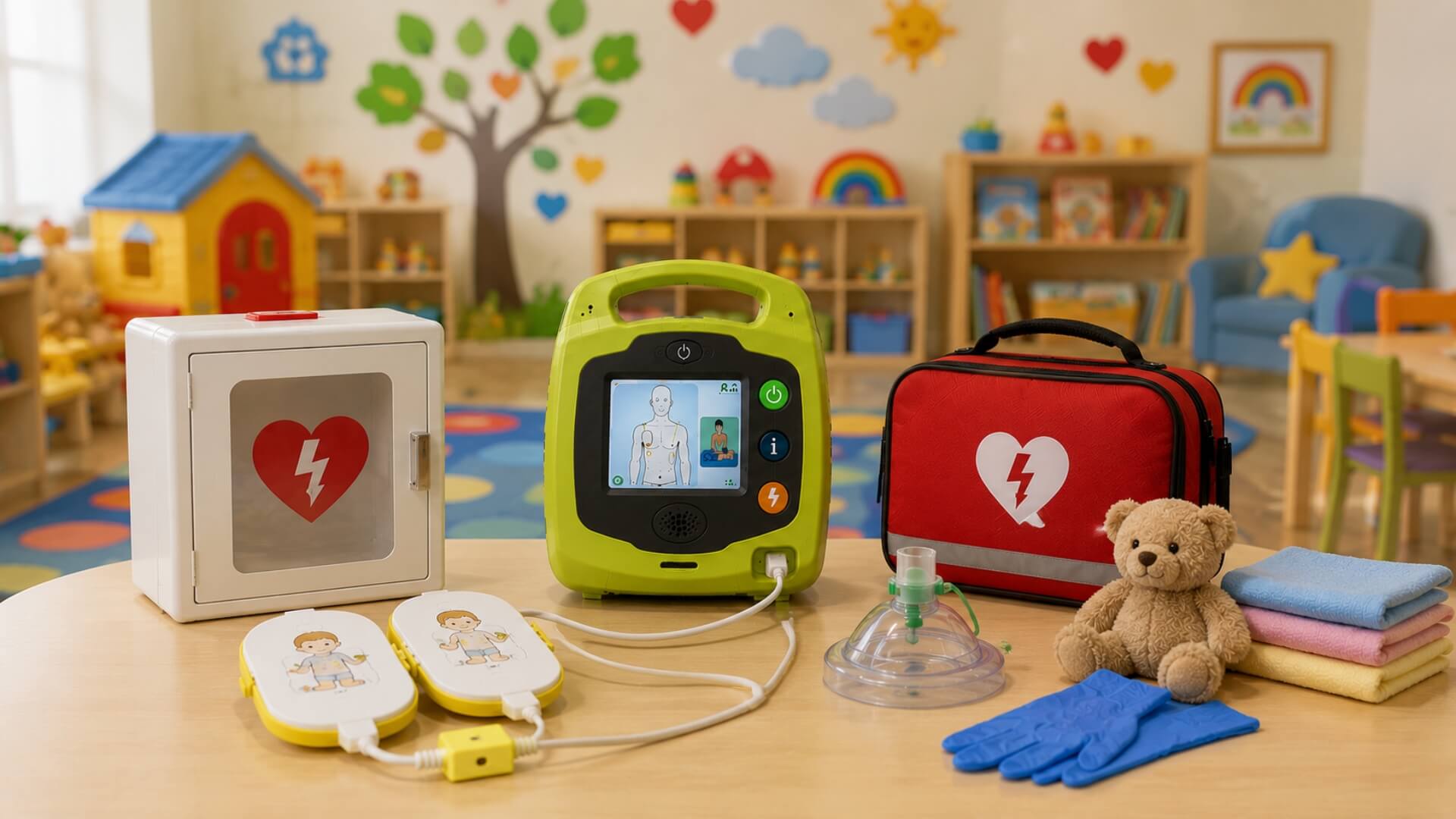
Daycares and preschools serve the population segment that requires the lowest defibrillation energy. Children under 8 years or under 55 lbs require pediatric-mode shock delivery per American Red Cross and American Academy of Pediatrics guidance. For a daycare facility, an AED without a clean pediatric workflow is not a partial solution, it is the wrong device.
Pediatric cardiac events in daycare settings are statistically rare but operationally consequential. The expected response: a panicked teacher or aide following voice prompts on a small body, in a facility where parents may sue regardless of outcome. The device must be near-foolproof for pediatric activation.
For daycares and preschools, the Philips HeartStart FRx with Infant/Child Key is the standard pick, the cleanest pediatric workflow in the AED market. LIFEPAK CR2 is the runner-up, where the built-in child mode button + cprINSIGHT™ pause-free CPR matters. Cardiac Science Powerheart G5 for small in-home daycares wanting Rescue Ready® daily self-test simplicity.
Why pediatric AED procurement is different
Adult AEDs deliver shock energy in the 120–200 joule range. Pediatric mode reduces this to 50 joules or lower, depending on patient size. Without pediatric capability, an AED used on a child can deliver excessive energy that increases secondary injury risk.
The American Red Cross and American Academy of Pediatrics both recommend pediatric-capable AEDs for any facility serving young children. Daycares, preschools, family fitness centers, places of worship with childcare, public venues, all fall in scope.
Pediatric workflow comparison across recommended models
| Model | Pediatric workflow | Speed under stress |
|---|---|---|
| Philips FRx | Insert Infant/Child Key | ~3 seconds |
| LIFEPAK CR2 | Press the child mode button | ~2 seconds |
| Cardiac Science G5 | Built-in child mode | ~2 seconds |
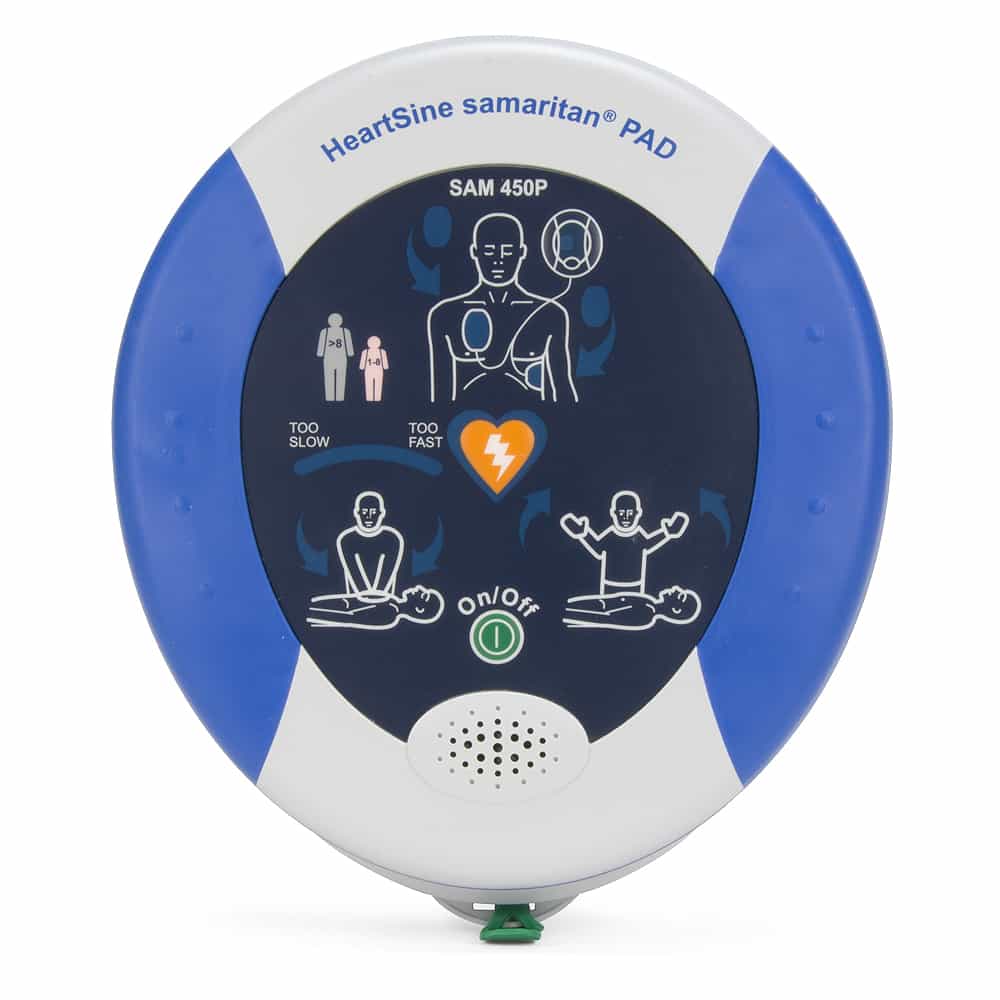
| HeartSine 360P | Auto-detect via Pad-Pak | 0 seconds (automatic) |
| HeartSine 350P | Swap to Pediatric Pad-Pak | ~15–30 seconds (failure-prone) |
| Philips OnSite | Swap to M5072A pediatric pads | ~15–30 seconds (failure-prone) |
The 3 picks for daycares and preschools
| Model | Price (2026) | Best for | Pediatric workflow |
|---|---|---|---|
| Philips FRx | $2,099 | Standard daycare pick | Infant/Child Key (cleanest) |
| LIFEPAK CR2 | $2,256 | Larger preschool campuses | Built-in child button + cprINSIGHT™ |
| Cardiac Science G5 | $1,799 | Small in-home daycares | Built-in child mode + daily self-test |
Real-world deployment scenario
120-child preschool, 25 staff, 8,000 sq ft single-floor facility. Recommendation: 1 × Philips HeartStart FRx with Infant/Child Key mounted in the main entrance hallway. Total: ~$2,053 device + $149 cabinet = $2,202 first-year. CPR + AED training for 4 designated staff: $300/year. 5-year program total: ~$3,500. State licensing may require additional documentation, verify with your local licensing authority.
Critical: training must include pediatric workflow
Standard AHA Heartsaver CPR + AED certification covers adult AED workflow. Daycare staff needs supplemental training on pediatric pad placement (one front, one back for small children) and pediatric mode activation specific to your facility’s device. Confirm with your CPR training provider before scheduling.
Verdict by daycare profile
Standard Daycare · Preschool · Under-5 Childcare
Philips HeartStart FRx with Infant/Child Key
Industry standard for pediatric-first facilities. Infant/Child Key + IP55 + 8-year warranty matches daycare operating reality. Read FRx review →
In-Home Daycare · Family Childcare · Low-Staff Programs
Cardiac Science Powerheart G5
Rescue Ready® daily self-test compensates for low-staff manual checking. Built-in child mode + 8-year warranty.
Frequently asked questions
Are AEDs required in daycares?
Mandated in California, New York, and several other states for licensed childcare facilities. Verify your state via the AED Laws by State guide and your local licensing authority.
What’s the cleanest pediatric AED workflow?
The Philips FRx’s Infant/Child Key, insert the key, and the device adjusts energy automatically. No pad swap required during rescue.
Should daycares have both adult and pediatric pads?
With the Philips FRx + Child Key, the same pads work for both, the key controls energy reduction. Other models may require separate pad cartridges.
What pediatric-specific training do daycare staff need?
Beyond standard CPR + AED certification, staff need facility-specific training on pediatric pad placement and pediatric mode activation. Confirm with your CPR training provider.
Can a daycare get an AED grant?
Some state-level grants cover licensed childcare facilities. The Federal AED Access for Heart Health Act focuses on schools, but state programs may cover daycares.
What is the survival rate for pediatric cardiac arrest with AED use?
Pediatric SCA survival is lower than adult overall, but on-site AED use within 3 minutes significantly improves outcomes vs no-AED scenarios. Specific rates vary by underlying cause.
Run the math for your specific facility
Get the 60-second AED recommendation matched to your environment, training level, and budget. Free, no email required.
Sources
- American Red Cross, Pediatric AED guidance
- American Heart Association, CPR + AED guidance
- American Academy of Pediatrics, Pediatric AED recommendations
Educational guidance. Verify state licensing requirements with your local childcare licensing authority.