

ZOLL Pedi Padz II (Infant & Child)
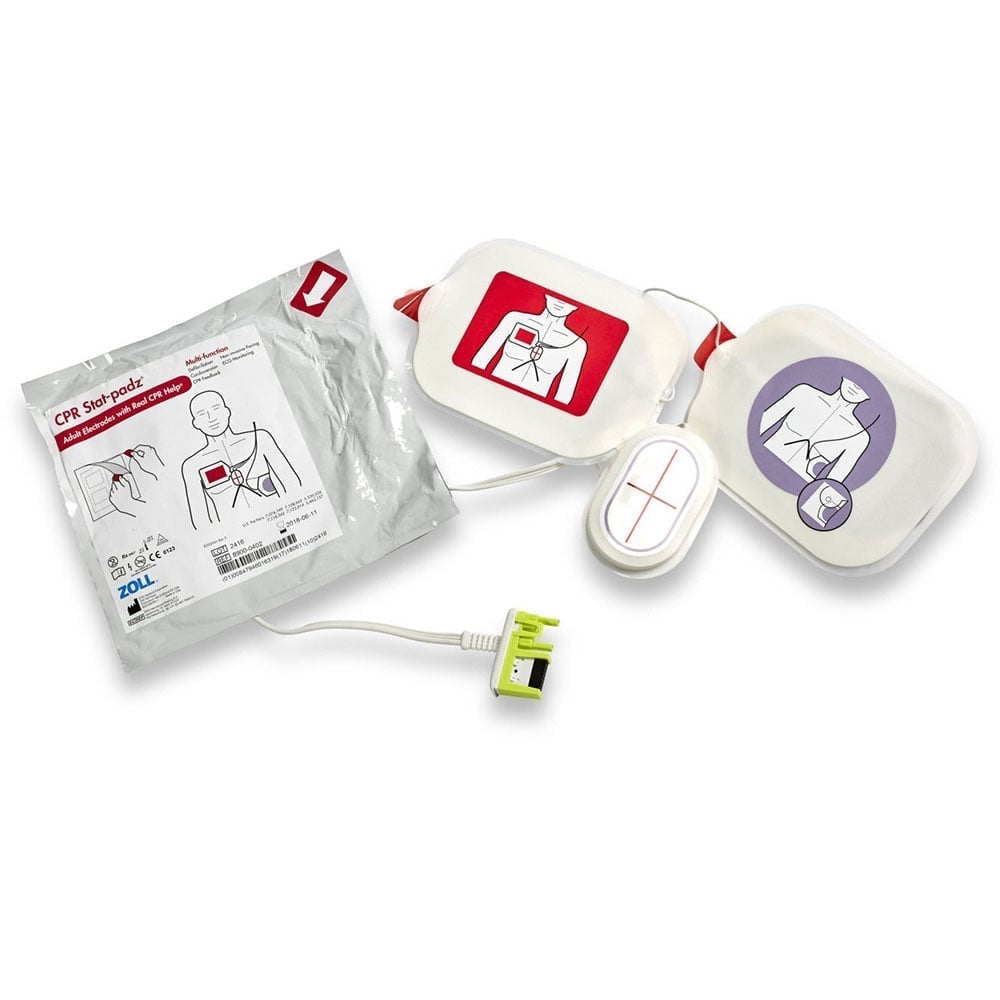
Order ZOLL pediatric pads, designed for the ZOLL AED Plus and ZOLL AED Pro AEDs. These electrode pads have a 2-year shelf life and are designed for use on children under 8 years old.
Listed price when last checked. Confirm current price, stock and bundle options on the retailer page before ordering.
Prices, configurations and included accessories may vary by retailer and product.
- Both are authorized US distributors.
- Full manufacturer warranty. Authentic manufacturer pads and battery.
- We earn a commission on referred sales. It does not change our scoring.
Technical Specifications.
- The Editorial Verdict
Order ZOLL pediatric pads, designed for the ZOLL AED Plus and ZOLL AED Pro AEDs. These electrode pads have a 2-year shelf life and are designed for use on children under 8 years old and under 55 pounds (25kg). They’re suitable for use on infants.
ZOLL Pedi Padz II for Use on a Child
When you connect the ZOLL Pedi Padz II to a compatible AED, the device automatically modifies its operations for pediatric use. The default energy settings are reduced to 50 J, 70 J, and 85 J.
The customized ECG analysis is tailored for pediatric patients, ensuring greater accuracy in heart rhythm assessments and the optimal level of shock when required. When the pads are installed, the device’s voice and text prompts notify you that you’re using pediatric pads, so you can always be sure you’re using the right electrodes for the job. The CPR and defibrillation coaching are also optimized for young patients.
Easy to Replace Pediatric Pads
To install the ZOLL pediatric pads, remove the standard adult pads by disconnecting the adapter. Then plug in the adapter for the Pedi Padz and verify your success by observing the green readiness light on the front of the AED. Also, make sure to note the pads’ expiration date, which you’ll find on a fluorescent yellow tag on the packaging.
Once the pads are installed, simply turn on the AED and follow the audible and text coaching to complete the external defibrillation and CPR. Each pad contains an anatomical diagram showing you exactly where to place the electrode. One should be placed on the center of the child’s chest and the other on the center of the child’s back.
Pedi-Padz II are required for any ZOLL AED Plus or AED Pro that may serve patients under 8 years old or under 55 lb, and are effectively mandatory in schools, daycare, churches with children’s ministries, dance studios, and youth athletic facilities. The pink-coded packaging is a deliberate visual cue against a panicked wrong-SKU swap. Adult CPR-D-Padz are NOT a pediatric substitute.
Best for / required for
- K-12 schools (mandatory in 23 states)
- Daycare + preschool
- Youth athletic + swim clubs
- Churches with children’s ministry
- Pediatric clinics
Not needed for
- Adult-only office (CPR-D-Padz alone is fine)
- Senior living (adult only)
- Gym/military/utility (adult only)
What We Like
What We Don't
Who Should Buy the ZOLL Pedi Padz II (Infant & Child) ?
Plan Your AED Deployment
Coverage, cost, and compliance, three tools, 10 minutes total.
Step 1
Quantity Calculator
How many AEDs does your facility need? Building type, sq ft, floor count. AHA 3-minute standard.
Step 2
Cost Calculator
True 5-year program cost. Device + pads + battery + cabinet + inspection + training + registration.
Step 3
State AED Laws
Is an AED required in your state? Check the school, gym and workplace rules for your state. Get the specific rule.
- Head-to-Head
Compare side-by-side.
Philips FRx vs ZOLL AED Plus
The two most-recommended AEDs. Pediatric key vs CPR feedback. Which one wins for your facility?
Philips FRx vs HeartSine 350P
Editor's Pick vs Budget Winner. Is the $949 price difference worth it for pediatric capability?
Philips FRx vs Philips OnSite
Same brand, different tier. Is the FRx worth the $415 upgrade over the OnSite? Depends on children.
- Also Consider
Related FDA-approved AEDs.


- Common Questions
Frequently asked questions.
When do I switch from Pedi-Padz to adult CPR-D-Padz mid-rescue?
You don’t, pad SKU is chosen based on the patient at the start of rescue, not switched mid-cycle. Use Pedi-Padz II for patients under 8 years or 55 pounds. Use CPR-D-Padz for everyone else. Once pads are applied, leave them on for the full rescue and don’t attempt to swap. If you mis-judged patient age at the start, AHA guidance is to continue with the pads already applied rather than risk delay swapping SKUs. Stock both in the same cabinet.
Are pediatric pads required by law for daycare?
Yes, in most U.S. states. Daycare AED requirements are governed by state child-care licensing rules, which typically reference AHA pediatric AED guidance. 23 states have explicit K-12 / childcare mandates requiring pediatric pad availability on every campus AED. Even in states without explicit mandates, negligence liability heavily favors having pediatric pads stocked, the cost ($165 per pair every 2 years) is trivial compared to the legal exposure of not having them in a setting with children present.
How does the energy level differ from adult pads?
Pedi-Padz II reduce the shock dose by approximately 75% compared to adult CPR-D-Padz, from about 150 joules adult down to about 50 joules pediatric. The reduction happens through both the pad geometry (smaller surface area) and the AED Plus’s automatic detection of which pad type is attached. This pediatric energy curve aligns with AHA pediatric defibrillation guidance for patients under 8 years or 55 pounds. Adult dose on a pediatric patient causes burns and potential cardiac damage.
What if I only have adult pads and a child needs the AED?
AHA guidance: if only adult pads are available and a child needs defibrillation, use adult pads rather than no defibrillation. Survival math favors the rescue attempt. Place pads in the anterior-posterior configuration (one on chest, one on back) to maximize distance and reduce overlap. This is documented in AHA pediatric AED protocols. However, the right answer is to stock pediatric pads if children could ever be patients, Pedi-Padz II at $165 every 2 years is a trivial cost vs the rescue gap.
- Verification & Sources
Every spec traces to a primary source.
FDA 510(k) P180028
Philips HeartStart FRx approval verification
Manufacturer documentation
Official product documentation + specifications
AED Leader
Current 2026 US retail pricing reference
American Heart Association
CPR + AED placement guidelines
American Red Cross
Pediatric AED guidance (under 8 / 55 lbs)
AEDBB Methodology
Full editorial framework · 4 primary sources · verified in dated passes