

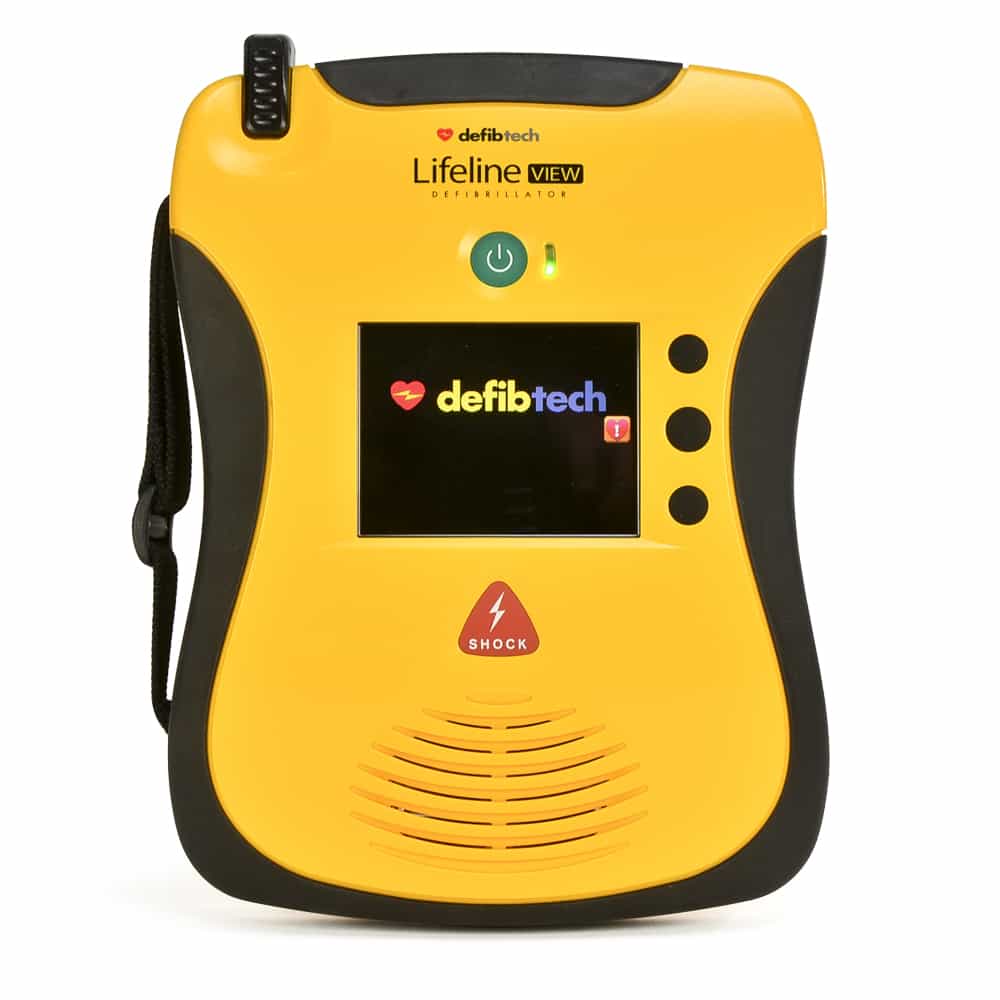
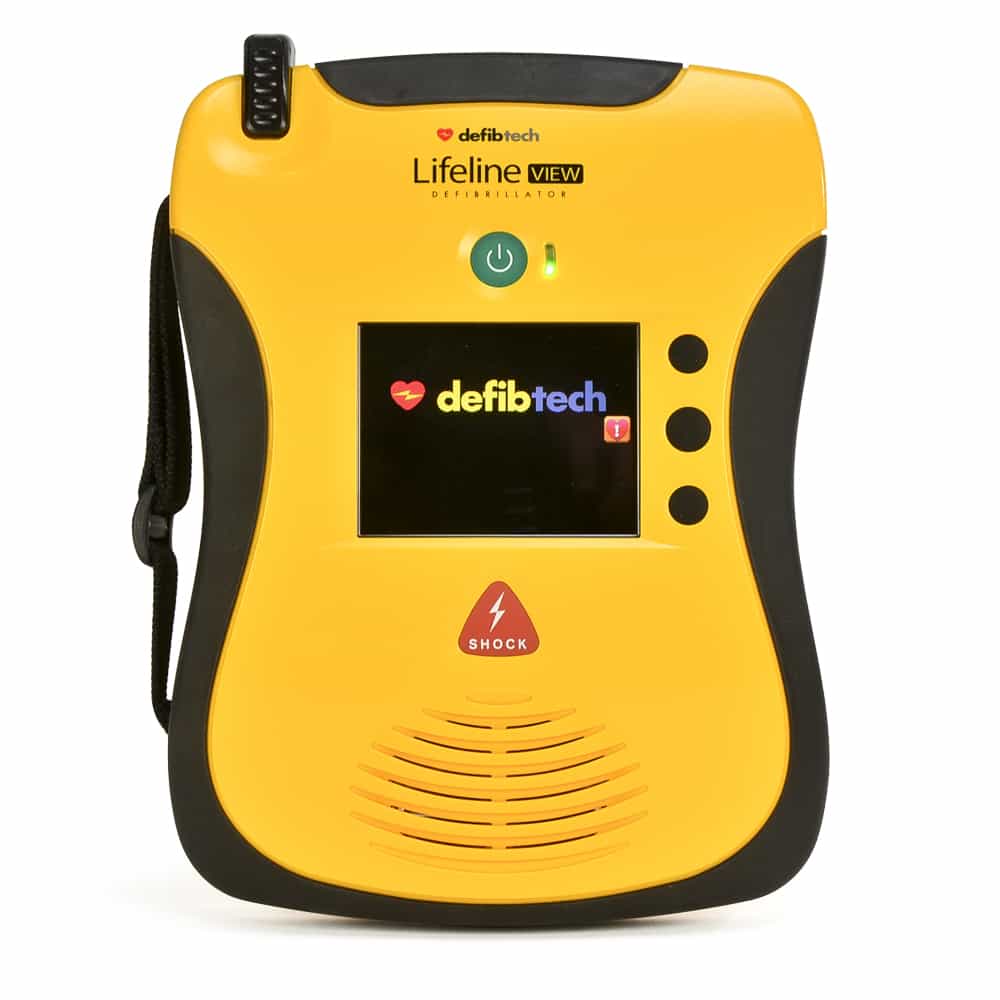
Defibtech Lifeline AED
Lifeline AED is Easy to Use This defibrillator is trusted by healthcare professionals and laypeople alike. The simple two-button design allows for streamlined operation, and audible instructions guide the user.
★★★★★
Verified 2026 authorized US distributor pricing. Bundle pricing often 8-12% lower.
Both authorized US distributors. Full manufacturer warranty. Authentic pads + batteries.
Technical Specifications.
- 🎯 The Editorial Verdict
Lifeline AED is Easy to Use
This defibrillator is trusted by healthcare professionals and laypeople alike. The simple two-button design allows for streamlined operation, and audible instructions guide the user step-by-step through CPR and external defibrillation. Voice coaching begins as soon as the user presses the “On” button and continues until emergency services arrive. Brightly illuminated indicator lights reinforce the voice coaching with clear text guidance.
State-of-the-Art Defibtech Technology
The Defibtech Lifeline AED uses biphasic waveform technology to assess heart rhythms and customize treatment accordingly. The technology is used in the most advanced AEDs and has been shown in scientific evaluations to be the safest and most effective method of saving lives in the event of sudden cardiac arrest.
The original Defibtech Lifeline is the audio-only budget version of the VIEW — same rugged chassis, same Defibtech accessory ecosystem, voice prompts instead of the video screen. We recommend it for multi-site budget deployments where uniform Defibtech accessories matter (one battery family, one pad SKU across many cabinets) and the rescuer will typically be trained or directly coached.
Best for
- Budget multi-site fleets
- Manufacturing + farms + outdoor venues
- Non-profits + restaurants + small retail
- Sites already running Defibtech accessory standards
Not ideal for
- Untrained outdoor rescuers (look at VIEW)
- Connected fleet needs (no WiFi)
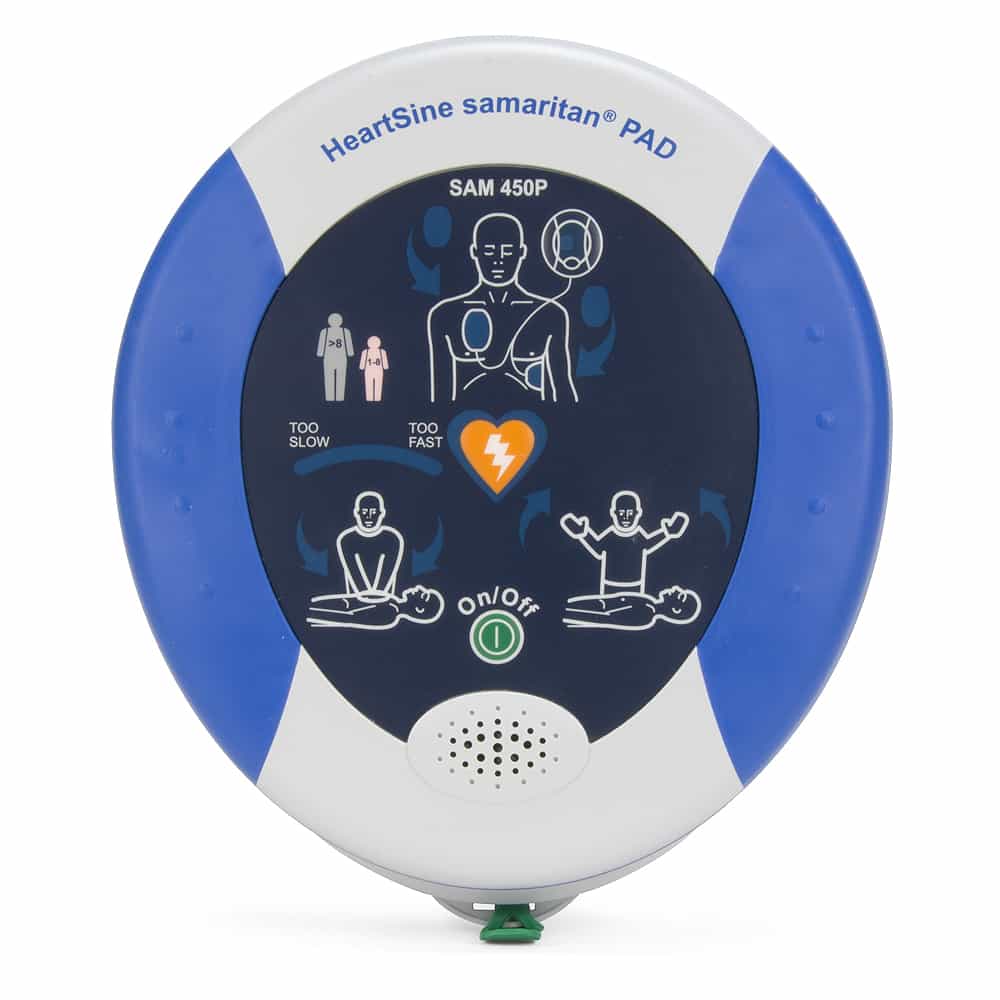
- Schools needing pediatric workflow simplicity (HeartSine 450P)
What We Like
What We Don't
Who Should Buy the Defibtech Lifeline AED ?
⚡ Plan Your FRx Deployment
Coverage, cost, and compliance— three tools, 10 minutes total.
Step 1
Quantity Calculator
How many FRx units does your facility need? Building type, sq ft, floor count. AHA 3-minute standard.
Step 2
Cost Calculator
True 5-year FRx program cost. Device + pads + battery + cabinet + inspection + training + registration.
Step 3
State AED Laws
Is FRx required in your state? 43+ states mandate school AEDs. 32+ mandate gym AEDs. Get the specific rule.
- ⚖️ Head-to-Head
Compare Defibtech Lifeline AED side-by-side.
Philips FRx vs ZOLL AED Plus
The two most-recommended AEDs. Pediatric key vs CPR feedback. Which one wins for your facility?
Philips FRx vs HeartSine 350P
Editor's Pick vs Budget Winner. Is the $949 price difference worth it for pediatric capability?
Philips FRx vs Philips OnSite
Same brand, different tier. Is the FRx worth the $415 upgrade over the OnSite? Depends on children.
- Also Consider
Related FDA-cleared AEDs.
- Common Questions
Frequently asked questions.
Lifeline AED vs Lifeline VIEW — should I save $700?
Save the $700 if your rescuers are trained or your environment doesn’t need visual coaching. The base Lifeline AED at $1,195 is audio-only with voice prompts; the VIEW at $1,895 adds the full-color video rescue screen. For trained gym staff or indoor offices, the visual coaching is unnecessary. For untrained outdoor rescuers in construction, farms, or marinas, the VIEW measurably reduces hesitation and is worth the $700. The decision usually comes down to rescuer profile, not budget.
Which Defibtech battery do I need — DBP-1400 or DBP-2800?
Both fit the Lifeline AED and Lifeline ECG. Choose DBP-1400 (standard, $245, 4-year cycle) for indoor offices and low-use single-AED sites. Choose DBP-2800 (high-capacity, $315, 7-year cycle) for high-use EMS fleets, fire departments, or remote outdoor sites where service-visit costs outweigh the $70 battery premium. The DBP-2800’s extended cycle eliminates 3 swap visits over a 7-year window. Note: neither fits the VIEW — that needs DCF-2003. Confirm part number before ordering.
What does the 9-Volt do?
The 9-Volt powers the Lifeline’s status indicator LED — the visible green/red light on the device front. It runs independently of the main defibrillation battery (DBP-1400 or DBP-2800). If the 9-Volt dies, the AED still works fully but you lose the visible readiness indicator. Replace approximately every 2 years at about $15. Easy to forget because the defib battery gets all the attention, but a dead 9-Volt creates a compliance gap during inspection audits.
- Verification & Sources
Every FRx spec traces to a primary source.
FDA 510(k) K043002
Philips HeartStart FRx clearance verification
Philips Healthcare
Official product documentation + specifications
AED Leader
Current 2026 US retail pricing reference
American Heart Association
CPR + AED placement guidelines
American Red Cross
Pediatric AED guidance (under 8 / 55 lbs)
AEDBB Methodology
Full editorial framework · 4 primary sources · monthly verified