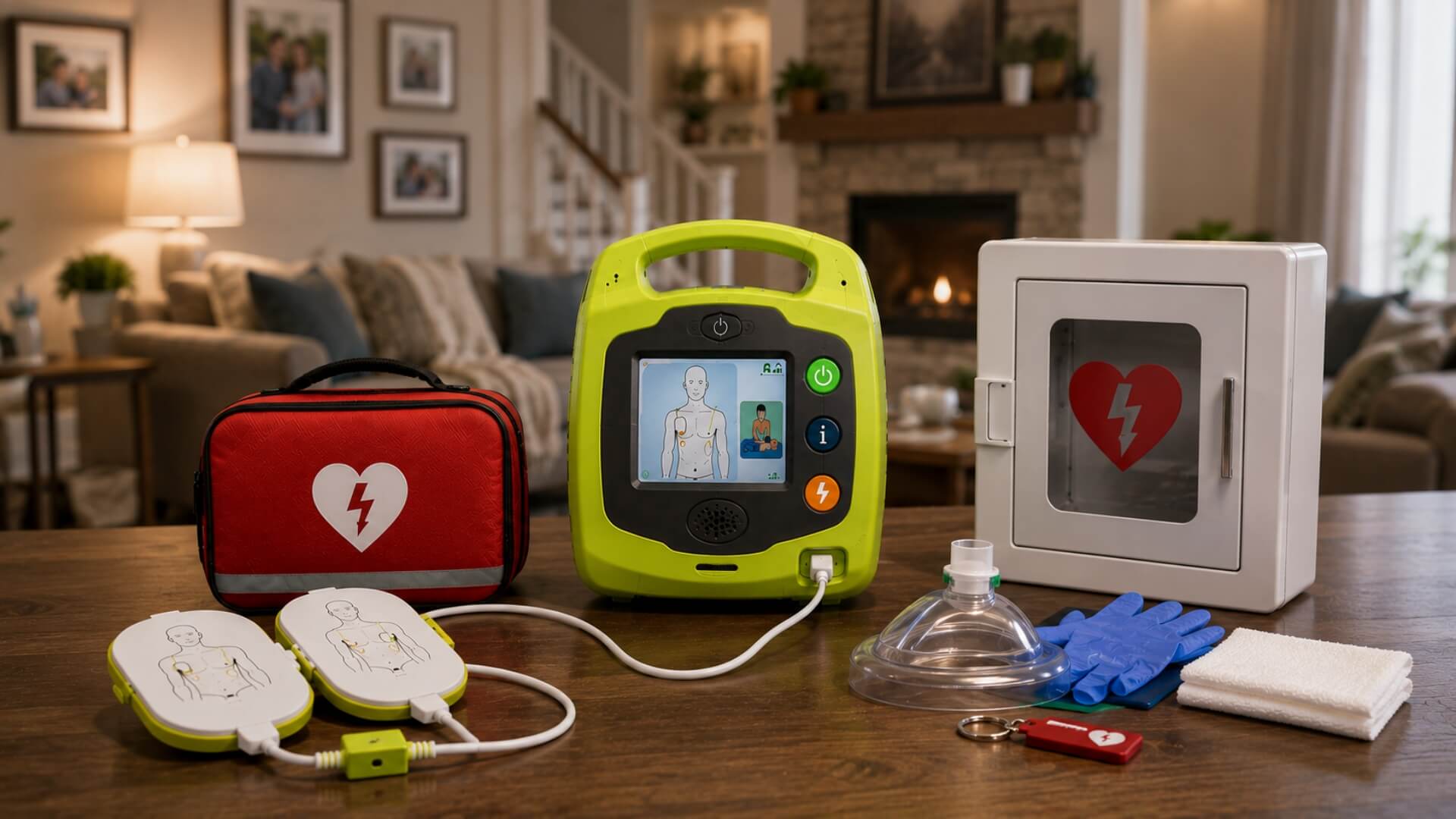
Approximately 70% of cardiac arrests happen at home or work, and the average US EMS response time of 8 minutes means home-based cardiac events have a roughly 20% survival rate without on-site AED access (AHA). For higher-risk households, anyone with diagnosed heart disease, family history of sudden cardiac arrest, or who lives 8+ minutes from EMS response, a home AED is genuinely life-saving infrastructure.
As of 2022, the FDA reclassified all AEDs as accessible without a prescription for general public use. Home AEDs can now be purchased directly by individuals from authorized distributors. The decision is whether the household profile justifies the cost and which model fits the use case.
Quick answer
For higher-risk adult-only households, the HeartSine 350P at $1,411 is the standard pick, cheapest FDA-approved option, lightest weight, 4-year combined Pad-Pak simplifies maintenance, 10-year warranty. For households with children under 8, upgrade to the Philips HeartStart FRx with Infant/Child Key. For rural households (8+ minutes from EMS), the Philips HeartStart OnSite simplicity wins.
Who actually needs a home AED?
Not every household. Home AED purchase is operationally justified for specific risk profiles:
- Anyone with diagnosed coronary artery disease, congestive heart failure, or arrhythmia
- Family history of sudden cardiac arrest, especially in first-degree relatives
- Households living 8+ minutes from EMS response (rural locations)
- Households where a member has previously experienced a cardiac event
- Caregivers of elderly parents with cardiac conditions
- Endurance athletes with undiagnosed cardiac conditions surfacing during training
For average-risk households, the operational ROI of a home AED is marginal. The investment makes more sense in CPR + AED training that travels with the household.
The 3 picks for home use
| Model | Price (2026) | Best for | 5-yr total | Pediatric |
|---|---|---|---|---|
| HeartSine 350P | $1,411 | Standard home pick, adult-only | $1,215 | Separate Pad-Pak |
| Philips HeartStart FRx | $2,099 | Households with children | $2,200 | Infant/Child Key |
| Philips HeartStart OnSite | $1,589 | Rural, simplicity-first | $1,800 | Separate pads |
Why HeartSine 350P dominates the home market
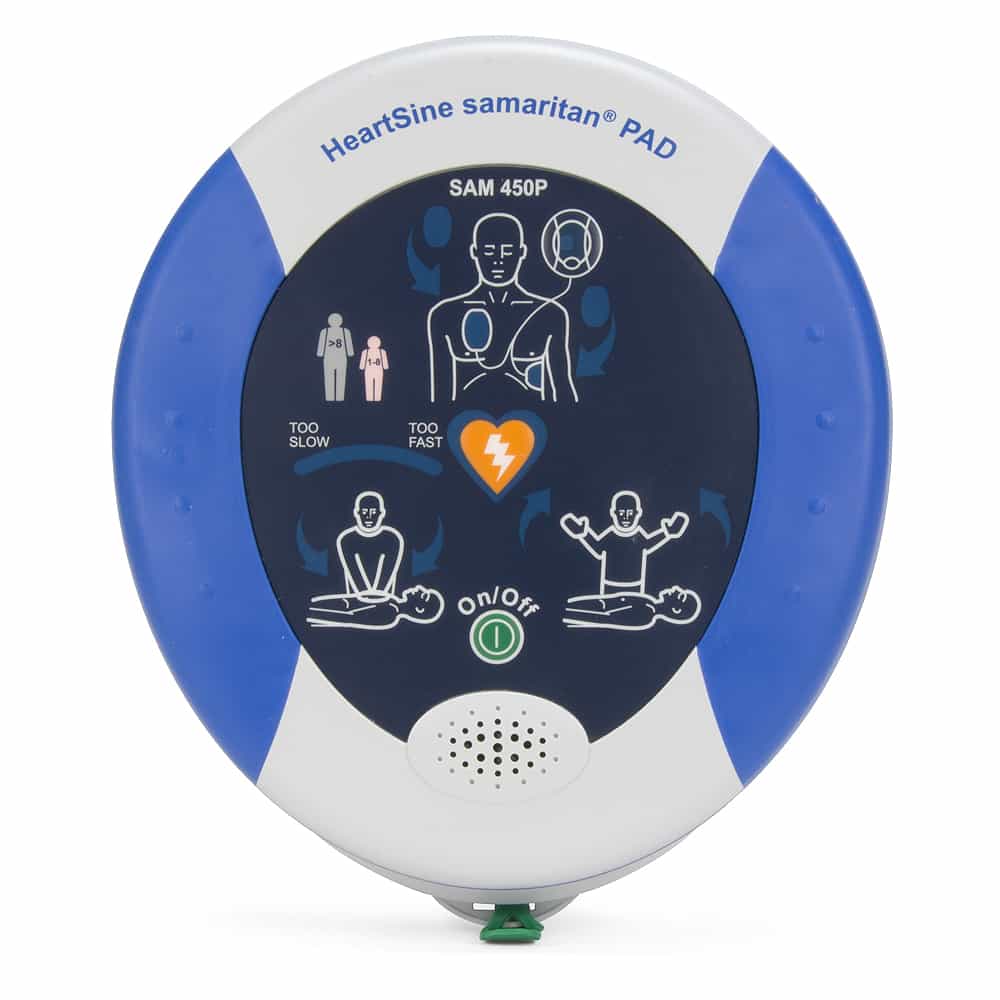
The HeartSine Samaritan PAD 350P is the cheapest FDA-approved AED on the market at ~$1,411 retail. The 4-year combined Pad-Pak (battery + pads in one cartridge) is the lowest-maintenance consumables architecture available, one replacement every 4 years for ~$120.
For a home buyer paying out of pocket, the 5-year program total comes in around $1,215, including a $149 cabinet. That’s roughly half what a comparable Philips program costs. The trade-off is no CPR coaching feedback (voice prompts only), acceptable for home use where the rescuer is likely a spouse or family member following voice instructions on a known patient.
The pediatric question for families
Households with children under 8 (or under 55 lbs) need pediatric capability. The Philips HeartStart FRx with Infant/Child Key is the cleanest workflow, insert the key, and the device reduces shock energy automatically. The HeartSine 350P requires a separate Pediatric Pad-Pak (~$170) that must be physically swapped onto the device during rescue.
For grandparent households where small children visit occasionally, the FRx + Child Key is operationally simpler under stress than the swap workflow.
Real-world home deployment scenario
Suburban family of 5, two adults plus three children ages 4–12. Mother has a family history of arrhythmia (her father died of SCA at 62). Lives 6 minutes from the local hospital. Recommendation: Philips HeartStart FRx with Infant/Child Key. Total purchase: ~$2,053 ($2,099 device + $109 Child Key). Wall-mount cabinet: ~$149. Total: ~$2,202. Annual CPR + AED training for both parents at CPR1: ~$150. The household has covered both rescue and training for under $2,400 first-year, all-in.
Verdict by household profile
Adult-Only · Higher Cardiac Risk · Budget-First
HeartSine 350P
Cheapest FDA-approved option. 4-year Pad-Pak = simplest home maintenance. 10-year warranty. The default home AED for adult-only households. Read 350P review →
Households with Children · Grandparents with Visiting Grandkids
Philips HeartStart FRx with Infant/Child Key
Cleanest pediatric workflow in the AED market. One device covers all family members from infant to adult. Premium justified by operational simplicity.
Frequently asked questions
Do I need a prescription to buy an AED for home?
No. As of 2022, the FDA reclassified all AEDs as accessible without a prescription. Any FDA-approved AED can be purchased directly by individuals.
Is a home AED tax-deductible?
Potentially yes, as a medical expense under IRS Publication 502 (subject to AGI thresholds). HSA and FSA funds also qualify. Confirm with your tax advisor.
What’s the cheapest FDA-approved AED for home?
The HeartSine Samaritan PAD 350P at ~$1,411. 5-year program total ~$1,215.
How long do home AED pads last?
2–5 years, depending on the model. HeartSine Pad-Pak combines a battery + pads for 4 years. ZOLL CPR-D-padz last 5 years (the longest).
Should I get CPR training along with the home AED?
Yes. CPR + AED certification takes 30 minutes via CPR1 and meaningfully improves rescue outcomes. Renewal every 2 years.
What if I have no medical training?
FDA-approved AEDs are designed for use by untrained bystanders. Voice prompts guide every step. Good Samaritan laws in all 50 states protect lay rescuers acting in good faith.
Run the math for your specific facility
Get the 60-second AED recommendation matched to your environment, training level, and budget. Free, no email required.
Sources
Educational guidance. Not medical, legal, or tax advice. In a medical emergency, call 911.