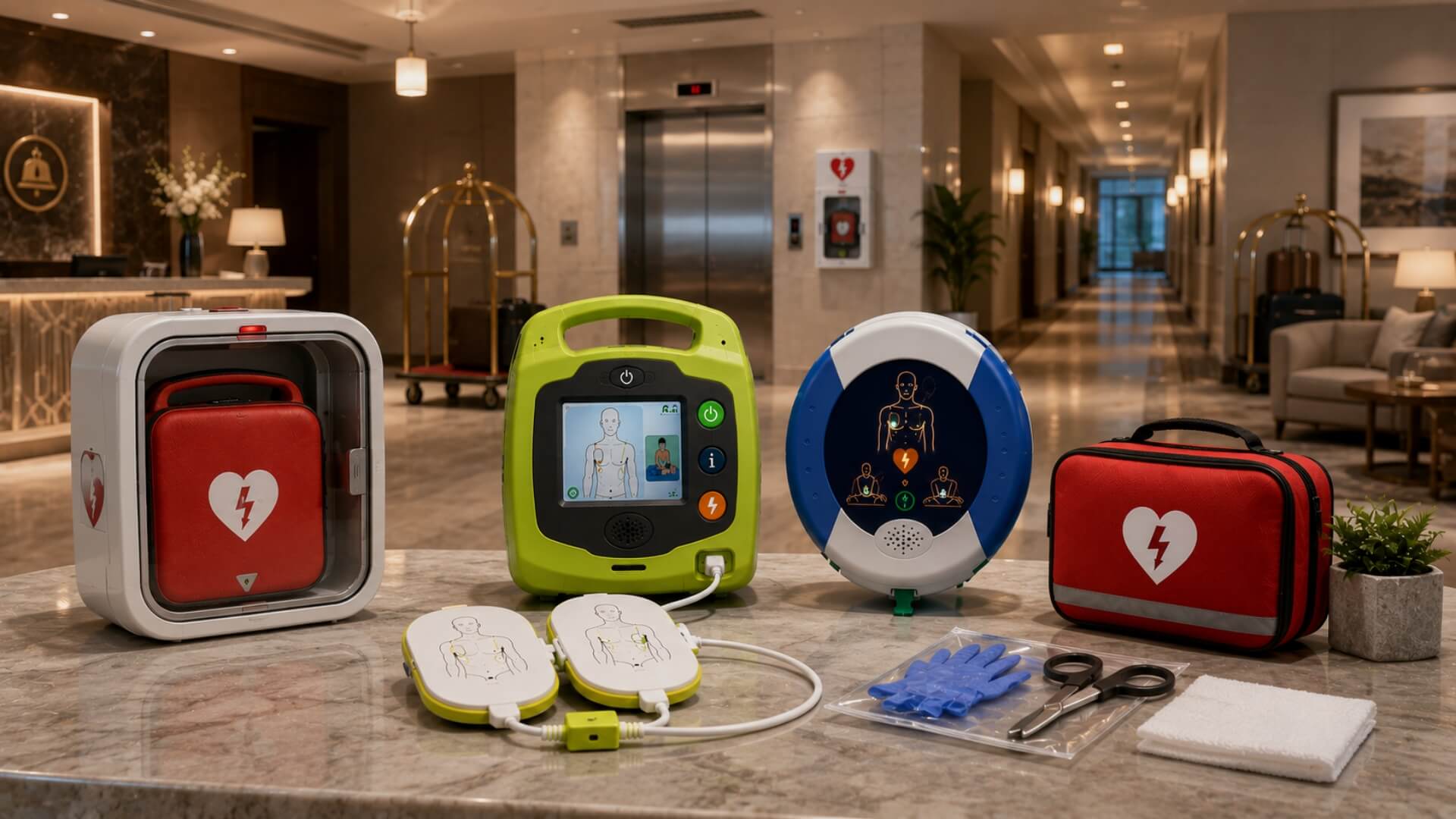
Hotel AED programs operate under a structural challenge that other industries don’t face: roughly 60–80% annual staff turnover at the front-desk and operations level. The rescuer at the moment of need is statistically likely to be an employee with under 6 months of tenure and possibly no prior CPR + AED training. Voice prompts alone are insufficient; the device must be near-foolproof for first-time correct use under stress.
Hotels also operate at a multi-floor scale with elevator-dependent vertical transit, a structural reason why the single-AED-at-front-desk model fails the AHA 3-minute survival window for guests on floors 5+.
For most hotels, the Defibtech Lifeline View is the standard pick, full-color video screen guides untrained front-desk staff through every rescue step, materially reducing first-30-second hesitation. Philips HeartStart OnSite is the runner-up for budget-conscious, smaller properties with consistent staff. Fleet programs (5+ AEDs across a property) benefit from ZOLL AED 3 with PlusTrac for centralized management.
Why high turnover changes the AED requirement
Hotel front-desk staff turnover averages 70–80% annually per Bureau of Labor Statistics data on accommodation-sector employment. The implication: any given quarter, more than half the front-desk team has under 6 months of tenure. Required CPR + AED training is often deferred for budget reasons, or completed at hire and never renewed.
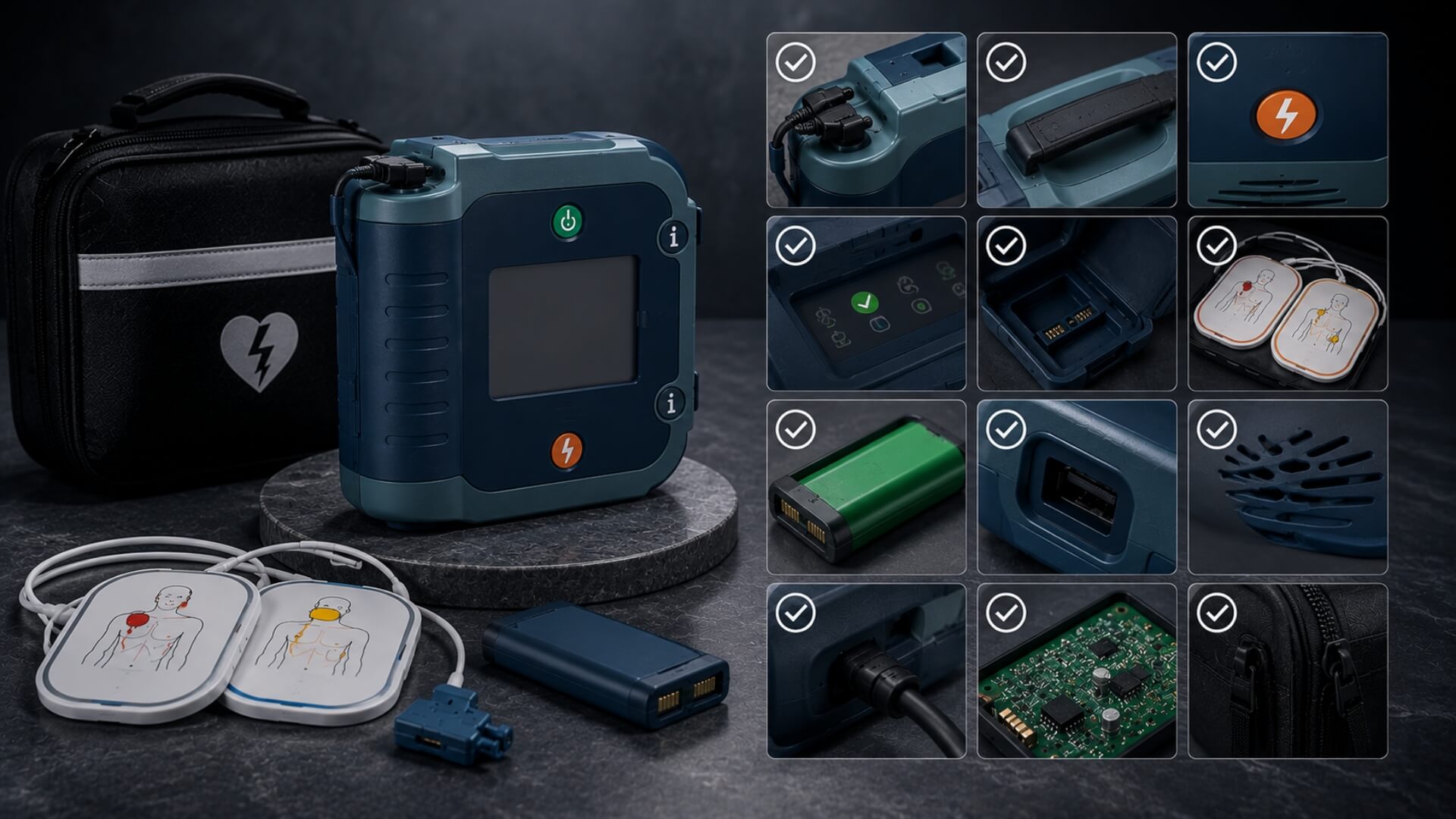
The device must compensate for inconsistent training. The Defibtech Lifeline View’s full-color video screen displays moving instructions for pad placement, hand position, compression rhythm, and clear-to-shock prompts. Field deployment data from hospitality EMS post-event interviews consistently cites the video display as reducing rescuer hesitation in the first 30 seconds.
Multi-floor coverage and the elevator problem
A hotel guest in cardiac arrest on the 12th floor is roughly 90–120 seconds from the lobby AED via elevator, and that’s before pad placement and shock delivery. The AHA 3-minute round-trip survival window is gone by the time the AED arrives.
The correct architecture is per-floor or per-elevator-bank AED placement. This sounds expensive but is mandated by physics: at an 8-minute EMS response time, survival drops to ~20% without on-site AED access (AHA).
| Hotel profile | AED count | Placement |
|---|---|---|
| Boutique hotel, 40 rooms, 3 floors | 2 AEDs | Lobby + floor 2 |
| Mid-size hotel, 150 rooms, 6 floors | 4 AEDs | Lobby + every other floor + fitness center |
| Large hotel, 350 rooms, 12 floors | 7–8 AEDs | Lobby + every 2 floors + fitness + pool + conference center |
| Multi-tower resort campus | 12+ AEDs | Per tower + per amenity zone |
The 3 picks for hotels and hospitality
| Model | Price (2026) | Best for | Why |
|---|---|---|---|
| Defibtech Lifeline View | $2,024.95 | Standard hotel pick | Video screen reduces untrained rescuer hesitation |
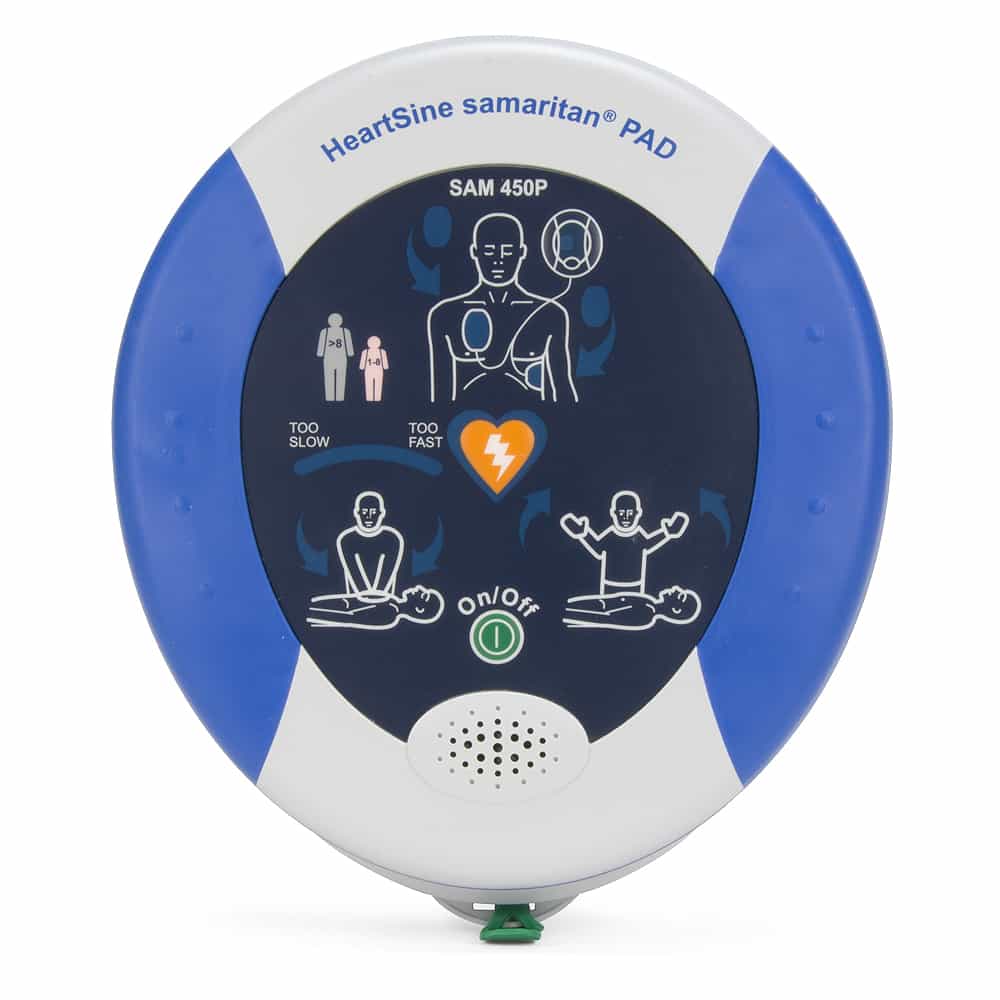
| Philips HeartStart OnSite | $1,589 | Budget pick, small properties | Simplest voice prompts in the Philips line |
| ZOLL AED 3 with PlusTrac | $2,199 | Multi-tower / chain fleet | Wi-Fi fleet management at scale |
Real-world deployment scenario
200-room mid-size business hotel, 8 floors, lobby + restaurant + fitness center + pool. Front desk staff turnover ~65% annually. Recommendation: 5 × Defibtech Lifeline View, lobby, floor 3, floor 5, floor 7, fitness center. Plus 1 × HeartSine 360P (IP56) on pool deck. Total: ~$10,500 device cost + ~$2,800 5-year consumables + ~$1,000 cabinets = ~$14,300 over 5 years. Annual: ~$2,860 amortized.
Verdict by hotel profile
Standard Hotel · 50–300 Rooms · Multi-Floor · High Turnover
Defibtech Lifeline View
Color video screen materially reduces untrained-rescuer hesitation. Standard pick for hotels where front-desk staff is the first responder. Read Lifeline View review →
Multi-Tower · Resort · Chain · Fleet 5+ Units
ZOLL AED 3 with PlusTrac fleet platform
PlusTrac centralizes expiration tracking and self-test monitoring across all properties. Material operational savings at chain scale.
Frequently asked questions
Are AEDs required in hotels?
Required in California, Nevada, and New York at certain occupancy levels. Most states leave it voluntary, though public-access laws may apply.
Does every floor need an AED?
For hotels over 6 floors, yes, per the AHA 3-minute standard. Elevator transit eats the survival window. Minimum: every other floor + amenity zones.
Why is the video screen worth the premium?
Front-desk staff turnover averages 70–80% annually. The video display reduces rescuer hesitation when training is inconsistent. Post-event EMS interviews consistently cite the screen as a positive.
Should pool decks have separate AEDs?
Yes, with IP56-rated devices (HeartSine 360P) due to humidity. Don’t share AEDs between the pool deck and the main lobby, the walk is too long.
What training do hotel staff need?
Minimum 2 designated CPR + AED certified responders per shift. Renewal every 2 years. Per-person cost $25–$75.
Can hotel chains negotiate fleet pricing?
Yes. AED Leader and Response Ready offer 10–20% bundle pricing for 2+ unit orders, with deeper discounts for chains of over 50 units.
Run the math for your specific facility
Get the 60-second AED recommendation matched to your environment, training level, and budget. Free, no email required.
Sources
Educational guidance. State laws change. Verify current requirements.