
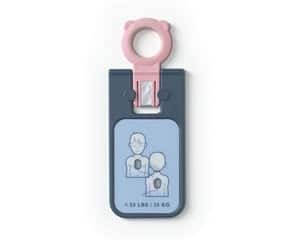
Philips HeartStart FRx Infant Child Key
Overview The Philips HeartStart FRx Infant/Child Key is a supporting accessory for AED programs. It is designed to complement your primary defibrillator setup. Intended Use This accessory enhances the functionality.
★★★★★
4.7/5
Verified 2026 authorized US distributor pricing. Bundle pricing often 8-12% lower.
Both authorized US distributors. Full manufacturer warranty. Authentic pads + batteries.
Technical Specifications.
- 🎯 The Editorial Verdict
Overview
The Philips HeartStart FRx Infant/Child Key is a supporting accessory for AED programs. It is designed to complement your primary defibrillator setup.
Intended Use
This accessory enhances the functionality of your AED system. Check compatibility with your specific device before ordering.
Key Features
- Designed to support the AED program needs
- Check compatibility with your AED model
- Enhances device functionality or organization
Practical Considerations
Verify compatibility with your AED model and setup before purchasing.
The Infant/Child Key is the FRx pediatric workflow — a small plastic key that slots into the FRx and switches it into pediatric energy mode while keeping the same adult SMART Pads II attached. Eliminates the wrong-pad failure mode that affects every other AED’s pediatric workflow. The Key has no expiration date buy once, use indefinitely. Compatible with the FRx ONLY.
What We Like
What We Don't
Who Should Buy the Philips HeartStart FRx Infant Child Key ?
⚡ Plan Your FRx Deployment
Coverage, cost, and compliance— three tools, 10 minutes total.
Step 1
Quantity Calculator
How many FRx units does your facility need? Building type, sq ft, floor count. AHA 3-minute standard.
Step 2
Cost Calculator
True 5-year FRx program cost. Device + pads + battery + cabinet + inspection + training + registration.
Step 3
State AED Laws
Is FRx required in your state? 43+ states mandate school AEDs. 32+ mandate gym AEDs. Get the specific rule.
- ⚖️ Head-to-Head
Compare side-by-side.
Philips FRx vs ZOLL AED Plus
The two most-recommended AEDs. Pediatric key vs CPR feedback. Which one wins for your facility?
Philips FRx vs HeartSine 350P
Editor's Pick vs Budget Winner. Is the $949 price difference worth it for pediatric capability?
Philips FRx vs Philips OnSite
Same brand, different tier. Is the FRx worth the $415 upgrade over the OnSite? Depends on children.
- Also Consider
Related FDA-cleared AEDs.
- Common Questions
Frequently asked questions.
Is the Child Key included with new FRx units?
Most new Philips FRx purchases from authorized distributors include the Infant/Child Key as part of the kit, but always confirm at order time. Some lower-priced FRx bundles strip the Key to hit a lower price point. The Key itself costs ~$110 if purchased separately. If your facility serves children, verify the Key is included before completing purchase. The Key has no expiration date, so once you have one per device, you’re done with that consumable forever.
What if I lose the Child Key during a rescue?
If a child is the patient and you’ve lost the Key, AHA guidance is to proceed with the FRx in adult mode rather than skip defibrillation. Survival math favors the rescue attempt with imperfect dose over no defibrillation. To prevent this scenario, tether the Key to the cabinet with a short lanyard, store a spare Key in the cabinet pouch, or buy a backup Key for $110. For multi-AED facilities, audit every cabinet quarterly to confirm Keys are present and accessible.
Can I use a Child Key on an OnSite or FR3?
No — the Infant/Child Key is mechanically and electrically designed for the FRx only. The Key slot doesn’t exist on the OnSite or FR3 chassis. For pediatric mode on the OnSite, you must swap to M5072A pediatric pads. For the FR3 (clinical / EMS use), pediatric energy adjustment happens through the device’s own controls. Cross-device accessory compatibility doesn’t exist in the Philips line — each model has its own pediatric workflow.
FRx Child Key vs OnSite M5072A pediatric pads — which is cheaper long-term?
The FRx Child Key wins on long-term cost by a wide margin. The Key is a one-time ~$110 purchase with no expiration, while M5072A pediatric pads run ~$95 per pair on a 2-year cycle. Over an 8-year warranty period, FRx Child Key total cost = $110. OnSite M5072A total cost = ~$380 (4 cycles at $95). For schools, daycare, and any K-12 facility with multiple AEDs, the Child Key economy is one of the strongest cost arguments for choosing FRx over OnSite.
- Verification & Sources
Every FRx spec traces to a primary source.
FDA 510(k) K043002
Philips HeartStart FRx clearance verification
Philips Healthcare
Official product documentation + specifications
AED Leader
Current 2026 US retail pricing reference
American Heart Association
CPR + AED placement guidelines
American Red Cross
Pediatric AED guidance (under 8 / 55 lbs)
AEDBB Methodology
Full editorial framework · 4 primary sources · monthly verified